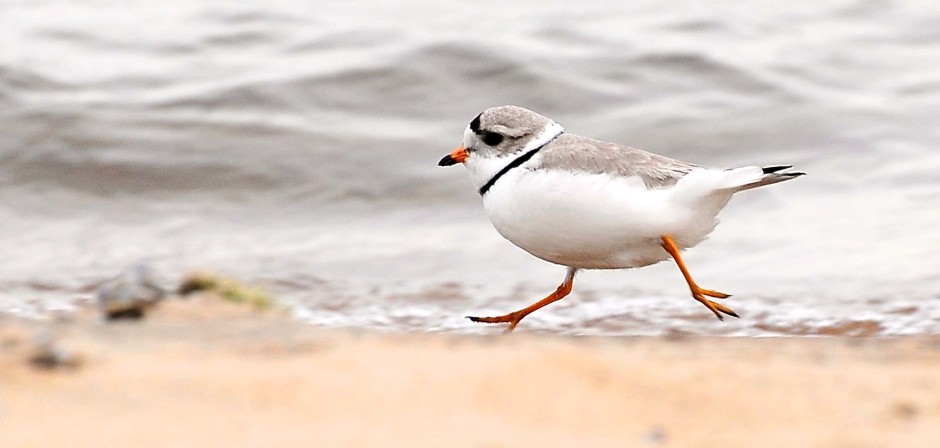
Christmas Bird Count 2025 Results:
Christmas Bird Count 2025 – Tawas Circle
The Christmas Bird Count (CBC) for Tawas was held on Wednesday, December 17th. There were 14 total participants. Eleven participants counted from four cars; one participant counted from a home feeder and two participants were involved in the planning process.
Most team miles were driven, but one team traversed 2.16 miles at Tawas Point State Park on foot and 0.55 miles at the Harbor. Section 4 contained the all-time top three E-Birders in the county; it was the first year that two of them participated in the CBC.
| Section 1 | Section 2 | Section 3 | Section 4 | |
| Team | Amy, MaryAnn, Nan | Larry, Jill, Patsy | Bill, Sarah | Gary, Tess, Sam |
| # Species | 21 | 22 | 29 | 35 |
| # Miles | 67 | 22 | 45 | (2.71 on foot)53 |
| # Hours | 5.5 | 3.3 | 5.5 | 7.5 |
Weather Conditions
The day was overcast and started out at 34 degrees, slightly climbing during the day. The wind was out of the NW at 17 mph. We had six to eight inches of snow on the ground with drifts almost waist deep. Backroads were plowed and snow covered, whereas well-traveled roads were mostly plowed and safe for travel. Ice cover was partially present on surface waters, as well as out on Lake Huron so waterfowl counts were a lower than usual.
Species Count
Participants found a total of 48 species. While there weren’t any rare species for the area, there were several species that were rare for this time of year. Those unusual species included Northern Flicker, Sharp Shinned Hawk, and Pied Billed Grebe. Oddly, no party reported any Canada Geese.
There were a few species that are within range, but hard to find or usually don’t come down this far each winter. This year, a Red Crossbill was found in this circle. In addition, two owls were found, which is interesting because both were found during the day. The two owls found were Barred (Section 3) and an Eastern Screech Owl (Section 4).
Participants:
- Sam Burckhardt
- Dawn Hooper (Sr. coordinator)
- Stu Hooper (Asst. to Sr. coordinator)
- Sarah Humphreys
- Amy Kohlhepp (Jr. coordinator)
- Jill Laidlaw
- Jan Modrok (home feeder)
- Patsy Mortimer
- Tess Nelkie
- Gary Nelkie
- Bill Roth
- Larry VanWagoner (f/k/a Sr. coordinator)
- MaryAnn Wojahn
- Nan Ulman
APPENDIX, Total Count per Species
13 Trumpeter Swan
54 Mallard
7 Redhead
5 White-winged Scoter
22 Long-tailed Duck
1 Bufflehead
28 Common Goldeneye
87 Common Merganser
10 Red-breasted Merganser
163 Rock Pigeon
1 Wild Turkey
163 Mourning Dove
3 Ring-billed Gull
14 American Herring Gull
1 Pied-billed Grebe
10 Bald Eagle
1 Sharp Shinned Hawk
2 Red Tailed Hawk
2 Red-shouldered Hawk
1 Eastern Screech Owl
1 Barred Owl
13 Red Headed Woodpecker
12 Red-bellied Woodpecker
9 Downy Woodpecker
8 Hairy Woodpecker
8 Pileated Woodpecker
1 Northern Flicker
2 Northern Shrike
116 Blue Jay
41 American Crow
14 Common Raven
93 Black-capped Chickadee
29 Tufted Titmouse
2 Golden-crowned Kinglet
16 White-breasted Nuthatch
4 Red Breasted Nuthatch
257 European Starling
4 Eastern Bluebird
4 American Robin
21 Snow bunting
3 Cedar Waxwing
1 Red Crossbill
42 House Sparrow
4 House Finch
21 American Goldfinch
12 American Tree Sparrow
17 Dark-eyed Junco
12 Northern Cardinal
ADDITIONAL TAXA
5 Common/Red-breasted Merganser, Mergus merganser/serrator
Christmas Bird Count 2025 – Oscoda Circle
The Christmas Bird Count (CBC) for Oscoda was held on Saturday, December 20th. There were 22 total participants. Seventeen participants counted from five cars and five participants counted from home feeders. Most team miles were driven, but one team traversed 0.66 miles at Lower Landing and 0.26 miles at Clark’s Marsh by foot.
| Section 1 | Section 2
Lakewood |
Section 2
Base |
Section 3 | |
| Team | Dawn, Stu, Carol | Peggy, Madel Jonathan, Debbie | Larry, Sue, Jill, Bonnie | Amy, Pam, Sam |
| # Species | 19 | 10 | 21 | 34 |
| # Miles | 66 | 23 | 19.78 | 22
(0.92 on foot) |
| # Hours | 6.25 | 2.25 | 3.5 | 3.75 |
| Section 4 | Dee Morand
(Feeder) |
Pattie Fraser
(Feeder) |
Konnie Spenceley
(Feeder) |
Judy Cook (Feeder) | |
| Team | Gary, Tess, Bill | Dee and Tim | Pattie | Konnie | Judy |
| # Species | 30 | 15 | 12 | 16 | 12 |
| # Miles | 53 | ||||
| # Hours | 5.25 | 4 | 4 | 4 | 4 |
Weather Conditions
The day was overcast. It started out with snow and 24 degrees Fahrenheit. The temperature steadily climbed during the day to 36 degrees. The wind was out of the South at 17 mph. We had four to six inches of snow on the ground, with drifts up to a foot. Backroads and two tracks were icy and snow covered, whereas well-traveled roads were mostly plowed and safe for travel. Ice cover was partially present on surface waters.
Species Count
Participants found a total of 44 species. There were no rarities in terms of species. Yet, there were a few birds that were still present, and unusual for this time of year. Those included American Pipits and White-Throated Sparrows. This year, we found more Common Goldeneye and American Black Duck than any other year. While Canada Geese are usually reported, this year we only found one.
As mentioned, we found more Common Goldeneye and American Black Duck than any other year. This is probably because one team spent time two-tracking into upper stretches of the Ausable River, which are not always accessible in winter. The team wanted to access some of the Trumpeter Swan wintering area, (those within the circle). The team went to Forest Service Camp Area called Lower Landing, which contains a large impoundment and an oxbow (camp sites 88 and 89). The Lower Landing accounted for most of the Trumpeters, American Black Duck, and Common Goldeneye in the count. If the circle went further West (Upper Landing), then we would have had much larger counts for swans and waterfowl.
Participants:
- Bonnie Banks
- Sam Burckhardt
- Pam Carter
- Carol Cole
- Judy Cook
- Sue Duncan
- Madel Erneman
- Pattie Fraser
- Dawn Hooper (Sr. coordinator)
- Stu Hooper (Asst. to Sr. coordinator)
- Amy Kohlhepp (Jr. coordinator)
- Jill Laidlaw
- Dee Morand
- Tim Morand
- Tess Nelkie
- Gary Nelkie
- Peggy Ridgway
- Bill Roth
- Debbie Schirmer
- Jonathan Schirmer
- Konnie Spenceley
- Larry VanWagoner (f/k/a Sr. coordinator)
Species and Counts
Canada Goose, Branta canadensis 1
Trumpeter Swan, Cygnus buccinator 84
Mallard, Anas platyrhynchos 156
American Black Duck, Anas rubripes 11
Greater Scaup, Aythya marila 1
Long-tailed Duck, Clangula hyemalis 32
Bufflehead, Bucephala albeola 11
Common Goldeneye, Bucephala clangula 274
Hooded Merganser, Lophodytes cucullatus 1
Common Merganser, Mergus merganser 46
Wild Turkey, Meleagris gallopavo 57
Ruffed Grouse, Bonasa umbellus 2
Rock Pigeon, Columba livia 445
Mourning Dove, Zenaida macroura 173
Ring-billed Gull, Larus delawarensis 10
American Herring Gull, Larus smithsonianus 8
Bald Eagle, Haliaeetus leucocephalus 10
Belted Kingfisher, Megaceryle alcyon 2
Red-tailed Hawk, Buteo jamaicensis 2
Cooper’s Hawk, Astur cooperii 1
Rough-legged Hawk, Buteo lagopus 1
Red-headed Woodpecker, Melanerpes erythrocephalus 15
Red-bellied Woodpecker, Melanerpes carolinus 15
Downy Woodpecker, Dryobates pubescens 15
Hairy Woodpecker, Leuconotopicus villosus 18
Pileated Woodpecker, Dryocopus pileatus 12
Blue Jay, Cyanocitta cristata 202
American Crow, Corvus brachyrhynchos 99
Common Raven, Corvus corax 16
Black-capped Chickadee, Poecile atricapillus 85
Tufted Titmouse, Baeolophus bicolor 52
Golden Crowned Kinglet, Regulus satrapa 3
White-breasted Nuthatch, Sitta carolinensis 24
Red-breasted Nuthatch, Sitta canadensis 18
Brown Creeper, Certhia americana 5
European Starling, Sturnus vulgaris 132
American Pipit, Anthus rubescens 2
House Finch, Haemorhous mexicanus 2
American Goldfinch, Spinus tristis 125
American Tree Sparrow, Spizelloides arborea 26
Dark-eyed Junco, Junco hyemalis 47
White-throated Sparrow, Zonotrichia albicollis 2
Northern Cardinal, Cardinalis cardinalis 14
Please Participate in 2026!
DATES: To Be Announced
Your First Christmas Bird Count
The annual Christmas Bird Count (CBC) began in 1900. It is an annual winter census of birds across the Western hemisphere. This bird survey is one of the two largest long-term data sets used to estimate bird population trends.
More generally, the CBC is an event of camaraderie. The CBC is a chance for birders (and non-birders) to come together at the inception of winter in search of every titmouse and snowy owl. Thousands of Michigan birders are loyal participants, but signing up can seem daunting for first-timers. Basic information and compiled answers to frequently asked questions have been gathered here, in hopes of getting new volunteers ready for their first CBC!
What is it?
The CBC is an annual census of birds across the US, Canada, Central and South America. The survey gathers data on the number and distribution of wintering species. AuSable Valley Audubon members have participated in this survey of birds for over 50 years. Our first year of participation was around 1970, under the leadership of Peggy Ridgeway.
Why should I participate?
You’ll be contributing to local and international bird conservation, all while reconnecting with old friends or meeting new ones. You’ll also be learning a lot about bird behavior and identification from your new, or experienced birding friends!
I’m not an expert birder – is that okay?
The CBC welcomes birders of all ages and experience levels. Even if you know nothing about birds, if you can see movement or hear a bird making noise you can be an excellent spotter. The CBC also appreciates non-birders who are willing to drive back-seat birders or keep a tally of observations.
How much does it cost?
In the past, there was a small participant fee but now the survey is completely free; however donations are accepted by the National Audubon Society to maintain the CBC database. If you carpool with others during your survey, you may consider chipping in for gas money.
Where is it?
Surveys take place within established “circles,” each with a 15-mile diameter. While the entire state isn’t covered, Michigan has over 70 CBC circles. The circles are subdivided into smaller sections for the teams to canvas. Iosco County has two circles, one in the Tawas area, one in Oscoda-AuSable area. Tawas was the first circle in the count, back in the early 1970’s. The Oscoda circle was added around 2005.
When is it?
The CBC takes place near Christmas and dates are announced closer to the event. The count lasts the full day, but you may participate for only a half day. People who live within the ‘circle’ may count birds at their feeders on those days as well. If you want to send your findings, log them into e-Bird and email the list to kohlhepp@comcast.net by 8:00 pm on count day.
What can I expect on my first CBC day?
Some hardcore birders begin early to search for owls pre-dawn, but most groups meet in the early morning to assign teams and locations. The meetings often take place at a local restaurant so those wishing to have breakfast while details are explained may do so.
Each team will survey a designated area within the circle. Teams may walk trails, check bird feeders, or observe from the vehicle as long as they are within the designated circle. The teams meet for breakfast 7:00am till 8, then for lunch at noon.
How do I get involved?
Attend the AuSable Valley Audubon November meeting to sign up or contact Amy Kohlhepp. Although walk-in participants are always welcome, it would be appreciated if you contact Amy before then. That way everyone can be assured a spot in a team that matches their abilities and time allotment.
How can I prepare?
While no preparation is necessary, you may practice your winter bird identification skills or scout survey areas ahead of time to locate potential hotspots.
Pack a supply bag the night before. Some good items to pack include: binoculars, scopes, cameras, cold weather clothes, tissues, water, and/or a thermos of your favorite hot beverage (packed the day of!).
You can learn more about using e-Bird in the CBC from this Video.
Contact: Amy Kohlhepp, kohlhepp@comcast.net 517-489-7879 (call or text), or Dawn Hooper at 248-245-0174